On this page
The Bridge of Sighs
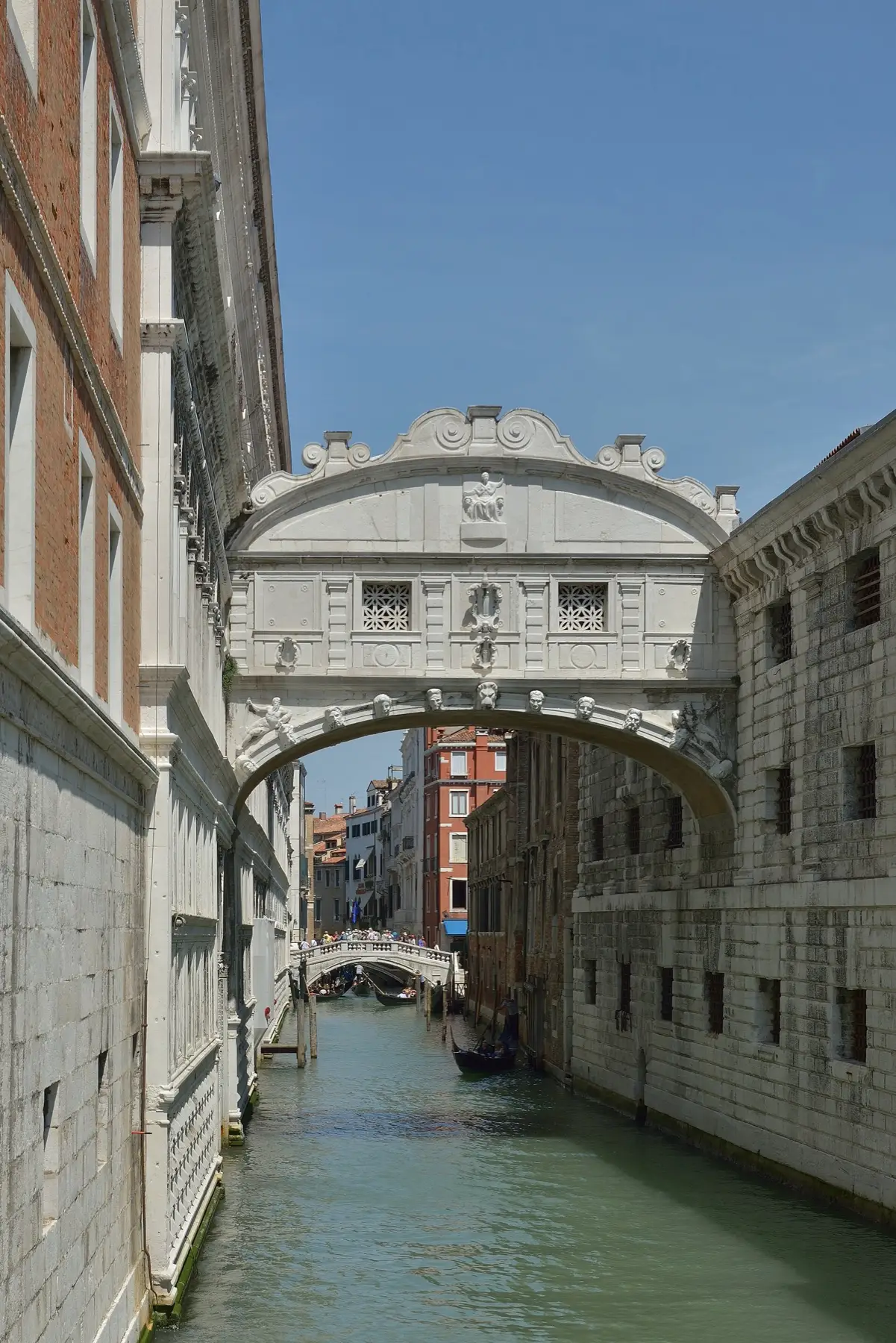
Built in 1614 to link the palace to the new prisons, it is an enclosed, covered bridge with two passages divided by a wall: one connects the prisons to the rooms of the Magistrato alle Leggi and the Quarantia Criminal, the other to the rooms of the Avogaria and the Parlatorio (visiting room).
The nickname dates from the Romantic era: it is the sigh of the prisoner who, leaving the court, crosses the canal towards his cell and through the small windows barely glimpses the lagoon, San Giorgio, freedom.
Wikipedia gives the construction as “shortly after 1600” and attributes the design to Antonio Contin; the English name “Bridge of Sighs” comes from Lord Byron.
The Prigioni Nuove
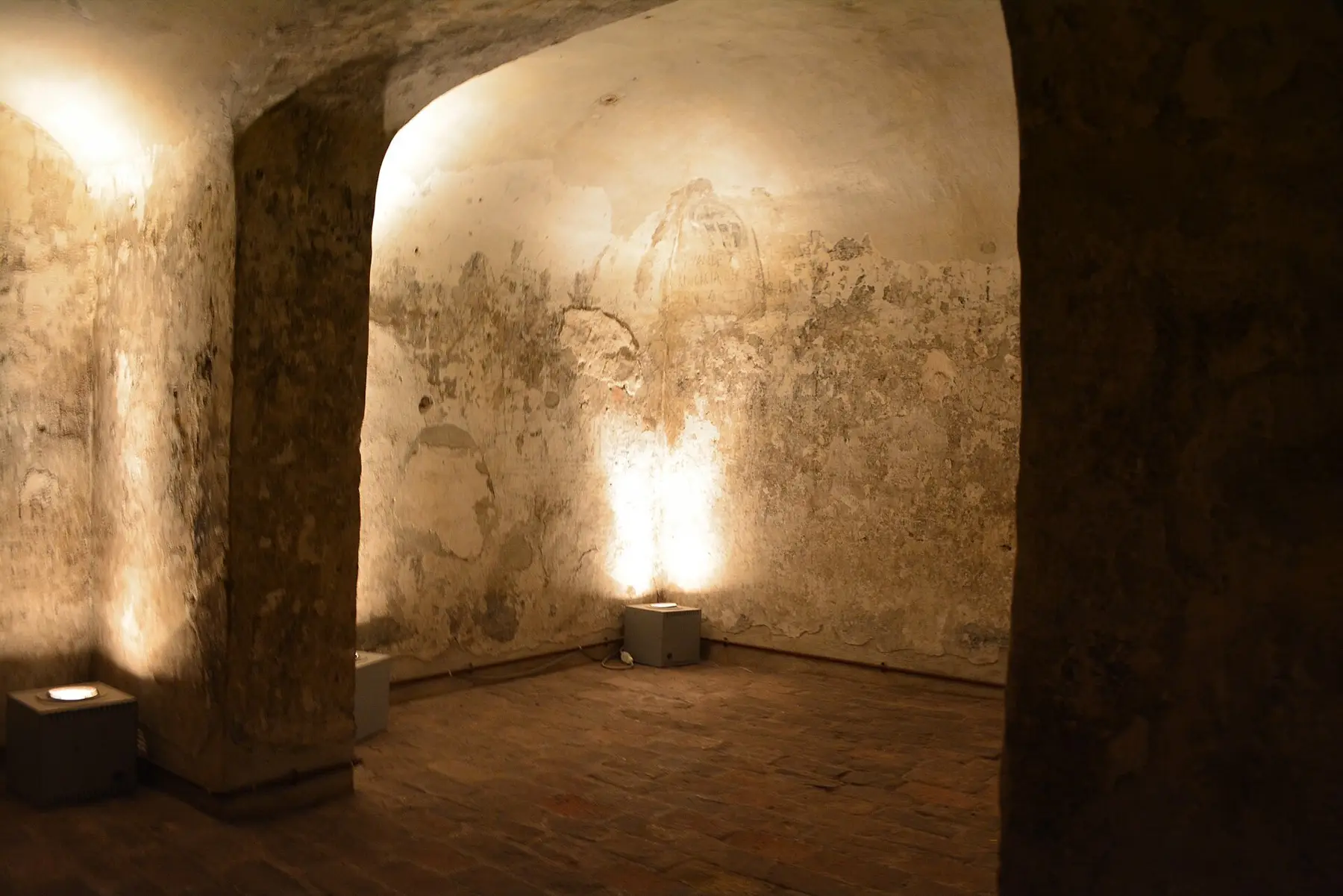
Each cell was lined, according to tradition, with criss-crossed larch boards nailed to the walls, floor and vault. According to the museum, the Prigioni Nuove are one of the first examples in Europe, if not the first, of a free-standing building designed specifically as a state prison. One cell displays the buglioli, the prisoners' slop buckets. After the first floor you can go straight back to the bridge or go down to the two lower levels and the prison courtyard.
The prisons are not accessible to people with reduced mobility.
The Pozzi and the Piombi: the palace's own cells
The Pozzi (the “Wells”), on the ground floor, and the Piombi (the “Leads”), under the lead roof (built in 1591 according to Wikipedia), are the cells inside the palace. Giacomo Casanova was locked up here, and in his memoirs he tells of his escape across the roof. They can only be visited on the Secret Itineraries, €40, which include both of his reconstructed cells.
Prisons and secret rooms
- Secret Itineraries with a guide Tiqets · Guided tour off the main route, plus the four museums · ★ 4.5/5 (616)from €40
- Doge's Palace and prisons with a guide GetYourGuide · Guided visit including the prisons · ★ 4/5 (1,933)from €48
- Doge's Palace with audio guide, prisons and Correr GetYourGuide · Entry with audio guide, Correr Museum included · ★ 4.3/5 (501)from €40.50
Partner prices checked on 27 October 2026; you see the total before you pay.
Questions and answers
Is the Bridge of Sighs included in the ticket?
Yes: the standard route through the palace crosses the Bridge of Sighs and enters the Prigioni Nuove.
Can you see Casanova's cell?
Only on the guided Secret Itineraries tour, which includes his two reconstructed cells.
When was the Bridge of Sighs built?
In 1614 according to the museum; Wikipedia says shortly after 1600.
Why is it called the Bridge of Sighs?
The nickname dates from the Romantic era: it recalls the sigh of the prisoner who crossed the canal from the court to his cell, barely glimpsing the lagoon through the small windows.
Where our information comes from
- Doge's Palace: the prisons (in Italian) — checked on 27 October 2026
- Doge's Palace: prisons (in English) — checked on 27 October 2026
- Doge's Palace: special itineraries (in Italian) — checked on 27 October 2026
- Doge's Palace: services and accessibility — checked on 27 October 2026
- Wikipedia (in English): Bridge of Sighs — checked on 27 October 2026
- Wikipedia (in English): Doge's Palace — checked on 27 October 2026