On this page
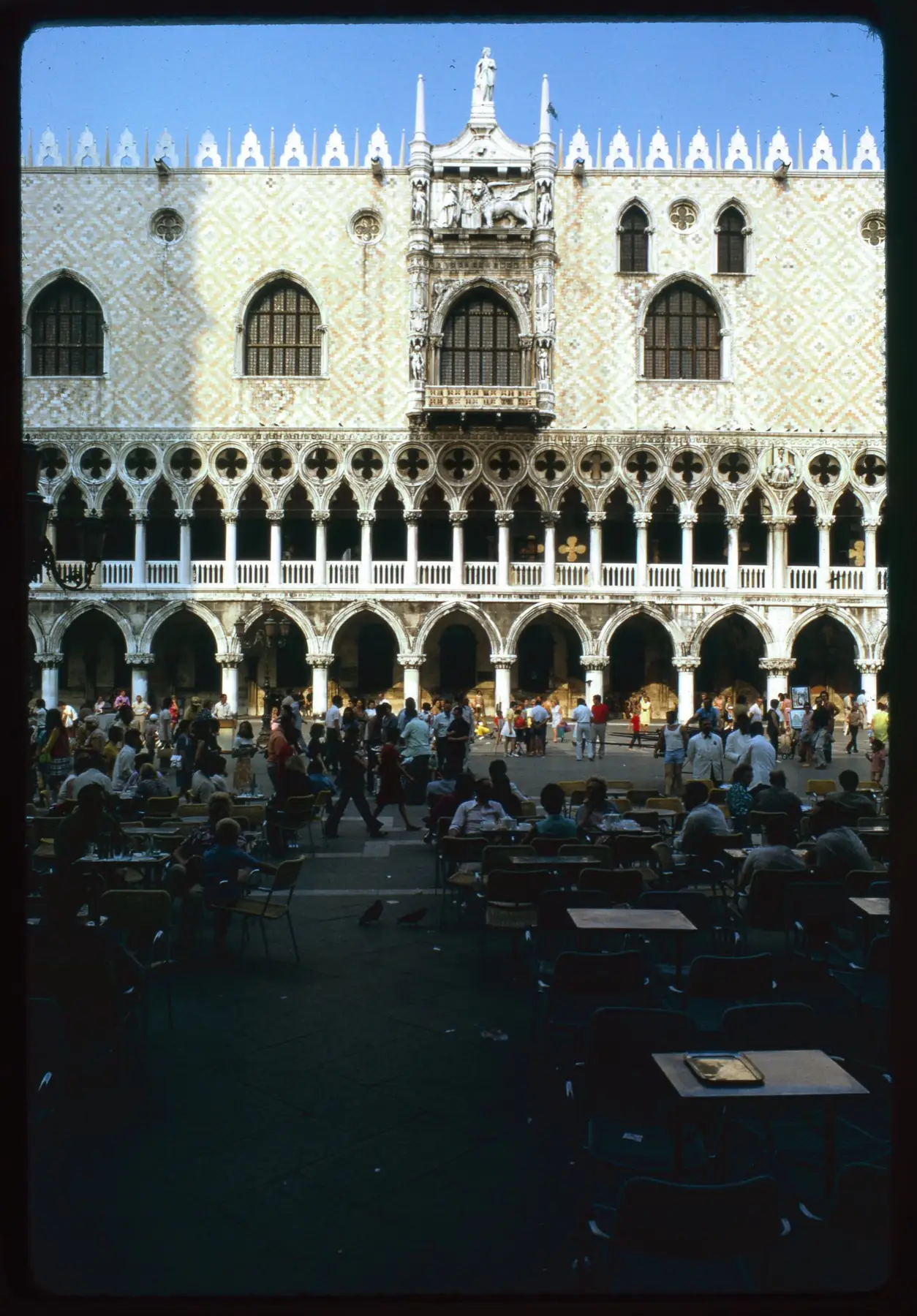
How the building came about
| When | What |
|---|---|
| 9th century | The origins of the palace. |
| From 1340 | Rebuilding of the wing facing the basin, the oldest. |
| From 1424 | The wing on the Piazzetta takes its present form. |
| 1438–1442 | Giovanni and Bartolomeo Bon build the Porta della Carta. |
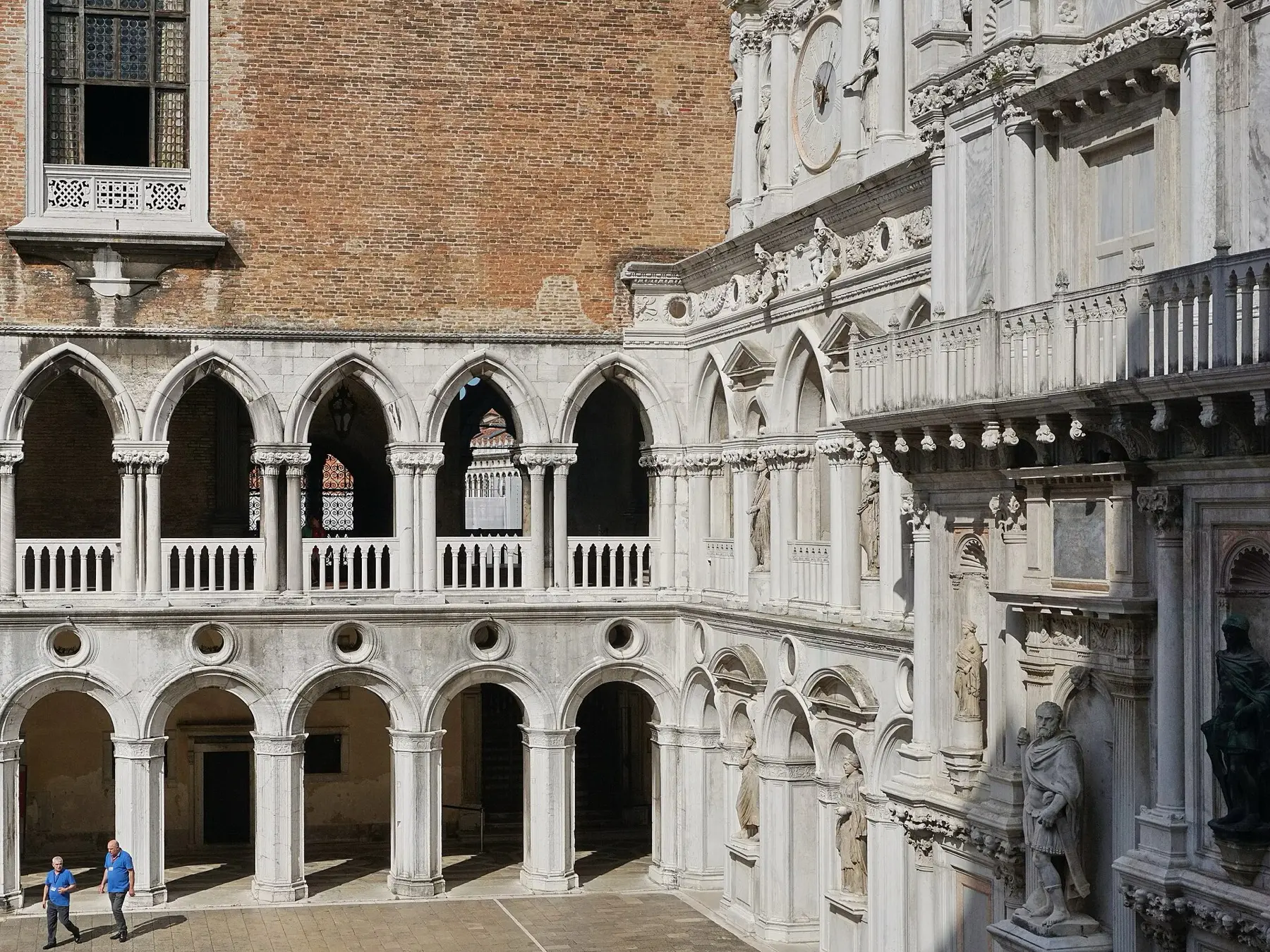
| 1483 | Fire; Antonio Rizzo rebuilds the wing on the canal in Renaissance style (the doge's apartments finished by 1510). |
| 1574 and 1577 | Two more fires; the rooms are redecorated by the great Venetian painters. |
| 17th century | The Prigioni Nuove (New Prisons) and the Bridge of Sighs. |
| 1797 | Ludovico Manin, the last doge, abdicates. |
| 1923 | The state entrusts the building to the city as a public museum. |
Who was the doge?
The doge was head of the Republic, but with very limited powers: according to MUVE's official sheet on the doge, he had no deliberative, executive or judicial power, could not govern alone, left the palace only on official occasions and could leave the city for a few days only with permission.
The official list counts 120 doges, from Paoluccio Anafesto (697–717) to Ludovico Manin (1789–1797). The election began in the Sala del Maggior Consiglio (Chamber of the Great Council) and continued in the Sala dello Scrutinio (Ballot Chamber), with extremely long procedures designed to prevent vote-rigging.
The magistracies in the palace
- Maggior Consiglio (Great Council): every Venetian patrician, regardless of standing, merit or wealth.
- Senato, known as the Pregadi: economy, finance and foreign policy.
- Consiglio dei Dieci (Council of Ten): created in response to Bajamonte Tiepolo's conspiracy of 1310: 10 members plus the doge and his six councillors, hence the seventeen panels still visible in the room.
- State Inquisitors, from 1539, to protect the secrets of the state.
- Quarantie: the courts of appeal, one for criminal cases and two for civil ones.
Curiosities
- The erased doge: in the frieze of the Great Council, in place of the portrait of Marin Faliero, who attempted a coup in 1355, there is a black cloth. He was sentenced to beheading and to damnatio memoriae.
- Imaginary portraits: the likenesses of the doges in the frieze are invented, because the earlier ones were destroyed in the fire of 1577.
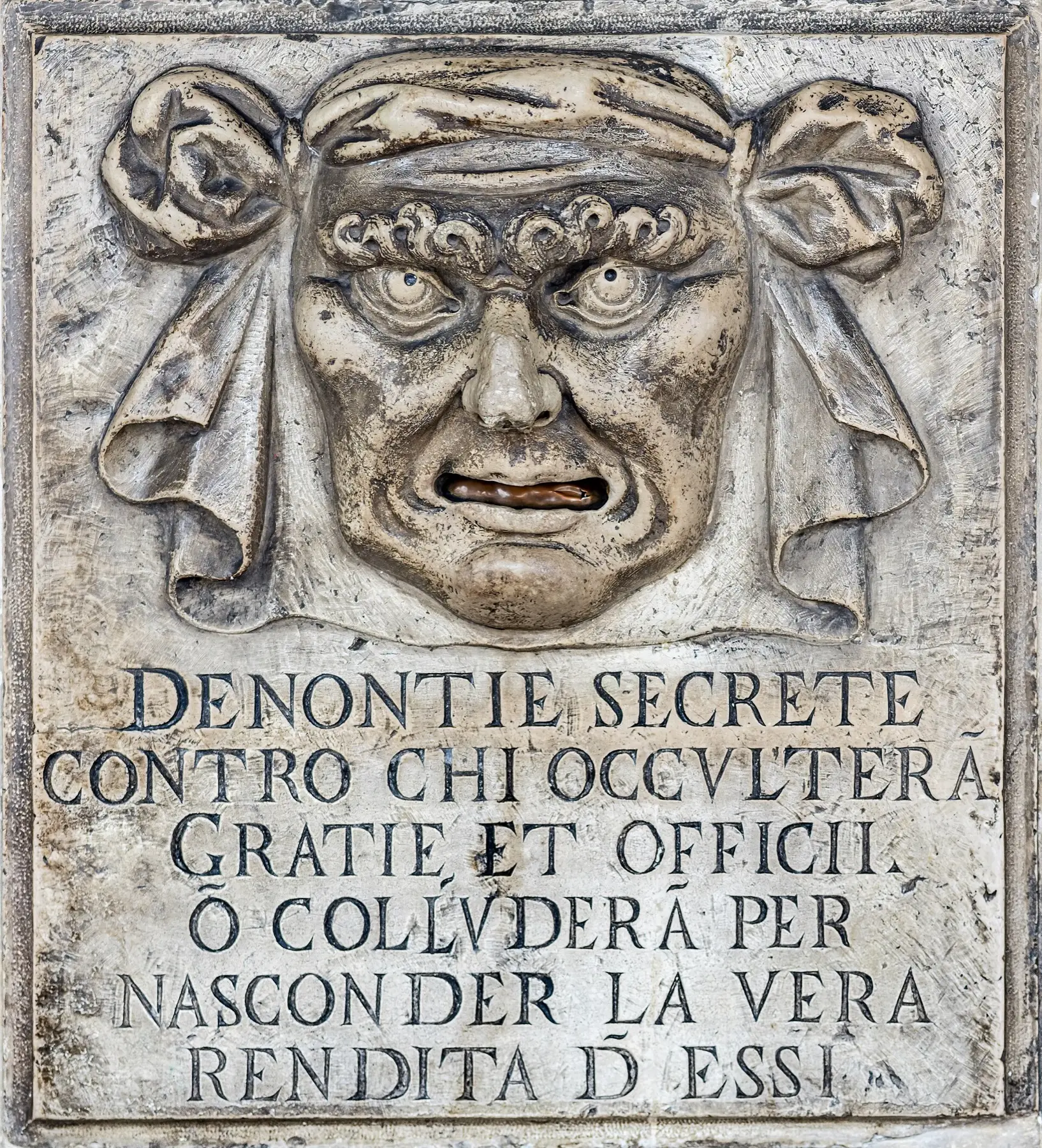
- The lion's mouths: along the loggias, slots in the wall where, from the late 16th century, people could post reports of crimes and embezzlement.
- The Golden Book: the Sala dello Scrigno held the registers of patrician births, which decided who belonged to the nobility.
- A plaque from 1362 on the loggias promises indulgences to anyone who gives alms to the prisoners.
Questions and answers
When was the Doge's Palace built?
Its origins go back to the 9th century; the wing facing the basin was rebuilt from 1340, the wing on the Piazzetta from 1424, and the wing on the canal after the fire of 1483.
How many doges were there?
120 on the official MUVE list, from 697 to 1797.
Who was the last doge?
Ludovico Manin, who abdicated in 1797.
Why is one portrait covered with a black cloth?
It is the place of Marin Faliero, condemned for attempting a coup and erased from public memory.
Where our information comes from
- Doge's Palace: building and history — checked on 27 October 2026
- MUVE: The Doge (PDF) — checked on 27 October 2026
- Official guide to the Doge's Palace (PDF, in Italian) — checked on 27 October 2026
- Doge's Palace: loggia floor (in Italian) — checked on 27 October 2026
- Doge's Palace: the courtyard and loggias (in Italian) — checked on 27 October 2026